.png)

Eight Names for the Problem. One Question for the Answer.

Before you Replace Your Furnace, Look at the Quench
Iridescence. Anisotropy. Strain pattern. Quench pattern. Quench marks. Wind spots. Wind marks. Rainbowing.
The glass industry uses all of these terms when people talk about visible patterns in tempered glass. The terms are not technically identical, but they often lead to the same customer conversation: “Why can I see that in the glass?”
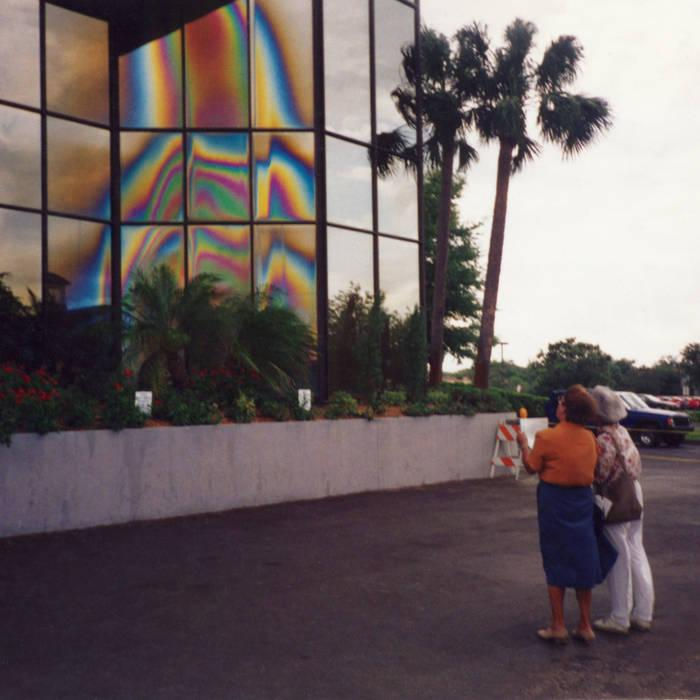
That creates a difficult commercial problem. A lite can meet the required specification and still draw an objection because of how it looks in a particular light, from a particular angle, or against a reflected sky.
So the most useful question is not which term wins the argument. It is this:
Can you make it less visible?
Why the Pattern Appears
Thermal tempering depends on controlled heating followed by rapid cooling. That process creates the residual stress that gives tempered glass its strength and safety behavior. The stress also changes how light travels through the glass. Under polarized light or certain viewing conditions, differences in that stress can appear as bands, spots, shadows, or colors.
This is why the subject can be confusing. The pattern may not look the same on every lite. It may become more noticeable outdoors, through polarized sunglasses, in reflected sky, or at a particular angle. A customer may call it rainbowing. A plant manager may call it wind spots. A specification may use anisotropy.
The language changes. The objection remains.
Why the Quench Deserves Attention
Heating uniformity is important, but the cooling stage also shapes the stress distribution in the finished glass. Airflow distribution, quench geometry, controls, process conditions, and the product mix can all matter when the goal is better optical consistency.
That creates an important option for fabricators with an otherwise useful tempering furnace. Before replacing the complete line, it may be possible to focus engineering attention on the quench section.
What a Serious Retrofit Requires
A quench retrofit is not a universal bolt-on answer. The work begins with the furnace and the glass it must process. IGE reviews the existing system, the quench, airflow distribution, controls, process conditions, product mix, and the circumstances in which the pattern becomes visible.
If the furnace qualifies, the project can move through engineering, mechanical integration, process commissioning, and acceptance testing. That sequence matters. It connects the proposed improvement to the actual line rather than to a generic promise.
When the right furnace receives the right engineered upgrade, the improvement can feel like one of those mini miracles. It is not magic. It is the result of focused engineering and careful execution.
What the Business Stands to Gain
Imagine fewer customer complaints and fewer objections to the appearance of tempered glass. Imagine fewer rejected lites, fewer remakes, and fewer hours spent explaining a visible pattern. Most of all, imagine greater confidence when a finished order leaves the plant.
When a Complete Furnace Is the Better Answer

Some furance lines will not be good retrofit candidates. A fabricator may also need more capacity, a different process window, broader glass capability, or a complete technology change. In those cases, IGE can discuss a full Sail Glass tempering furnace, including configurations capable of processing borosilicate as well as conventional soda-lime applications.
The point is to begin with the production goal, not a predetermined piece of equipment. IGE can help compare the practical retrofit path with the complete-furnace path.
Start With One Conversation
Once again, we have found a solution—and this is a big one.

Call IGE today 800-919-7181 to schedule a private Microsoft Teams meeting with one of our sales professionals.
We will look at your furnace, your glass, and your goals. We will explain what information is needed for a retrofit evaluation and, if appropriate, show you the complete Sail Glass furnace options available—including borosilicate-capable configurations.


Comments